Runner’s Knee Treatment in Wandsworth
It started as a niggle on long runs. Now it is there on the stairs, after sitting, and within the first kilometre. And the internet has told you everything from stop running forever to just foam roll it.
Runner’s knee, or patellofemoral pain, is the most common running injury we see at our Wandsworth clinic. Runners coming off the commons, the Thames path and the track at King George’s Park. It is also one of the most fixable, once you understand your reason for it.
Because here is the thing: runner’s knee is rarely a knee problem. The knee is usually where the problem shows up, not where it starts.
Why your knee actually hurts
The usual causes, roughly in order of how often we see them:
Most runners have two or three of these stacked together. Our assessment looks at your movement, your strength and your training history to work out your combination.
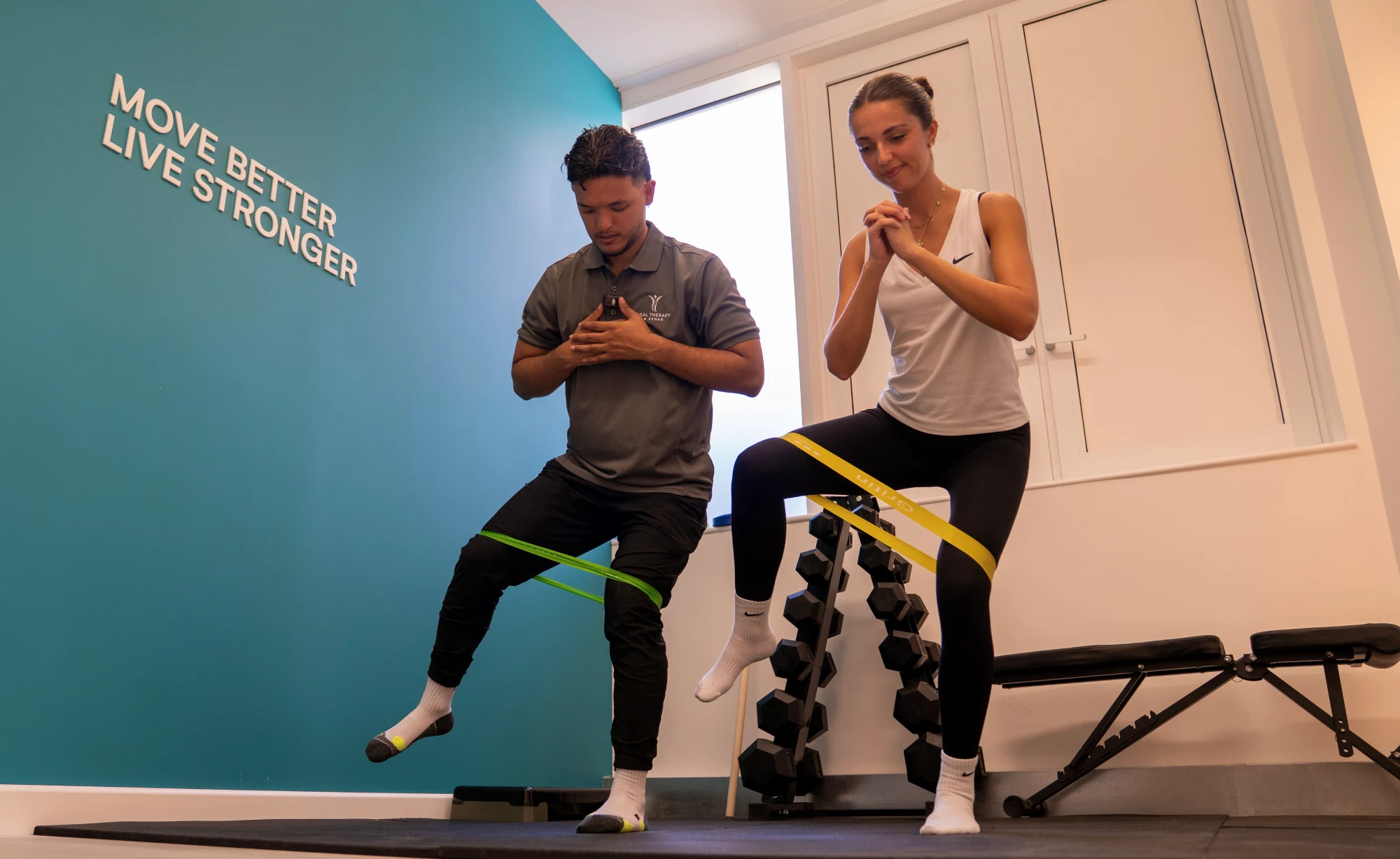
How we fix it, without telling you to stop running
How long until I am running pain free?
Most runners are back to comfortable full training in 6 to 12 weeks, with clear improvement in the first 2 to 3. Caught early, it can be much faster. Which is a polite way of saying: please do not run on it for another three months first.
Frequently Asked Questions
Almost certainly not. Complete rest weakens the exact areas that need to get stronger. We will find your tolerable level and build from there.
Probably not in the way you have been told. ITB syndrome is a different problem, felt on the outside of the knee, and either way foam rolling alone will not fix the cause.
Sometimes part of the picture, rarely the answer. We will assess whether yours matter here.
Runner’s knee does not wear your knee out, and runners have healthier knees on average than people who do not run. Fix the cause and keep running.
Based in Wandsworth, Southwest London
A short walk from Wandsworth Town Station and Southside Shopping Centre. Easy access from Earlsfield, Clapham Junction, and surrounding areas.